

Reusable Filters vs. Disposable: Which Is Better?
If I want lower waste and lower long-term cost, I’d pick reusable. If I want better fine-particle filtration and less work, I’d pick disposable.
That’s the short answer. Reusable furnace filters usually cost $50–$100 up front and can last 5–10 years, but I have to wash and fully dry them every 30–90 days. Disposable filters cost less at the start - often $2–$25 each - but over 5 years I may throw away 20 to 60 filters and spend much more, especially if I use higher-MERV pleated options.
What matters most:
- Cost: reusable often wins after 1–2 years
- Air cleaning: disposable usually wins, especially at MERV 8–13
- Waste: reusable creates far less trash
- Upkeep: disposable is easier; reusable needs regular cleaning
- Best fit: allergy or pet homes often do better with higher-MERV disposable filters
Reusable vs Disposable Furnace Filters - Pros, Cons & Best Choice Quick Comparison
| Filter Type | Upfront Cost | 5-Year Cost | Filtration Range | Upkeep | Waste |
|---|---|---|---|---|---|
| Reusable | $50–$100 | about $80 | up to MERV 7 | Wash every 1–3 months; dry fully | Very low |
| Disposable | $2–$25 each | about $147–$372 | often MERV 4–13 | Replace every 30–90 days | Higher |
My takeaway: if I know I’ll keep up with cleaning, reusable can save money and cut trash. If I care more about fine dust, pollen, and pet dander - or I know I’ll forget maintenance - disposable is the safer pick.
Reusable Furnace Filters: Upfront Cost, Less Waste, and Regular Cleaning
A reusable furnace filter can cut down on waste and help keep airflow steady if you clean it on time. That timing matters. Spring pollen, summer dust, and winter recirculation all add more strain, so regular cleaning isn't optional. In practice, the big issue isn't just the price at checkout. It's whether you're willing to keep up with the maintenance.
ElectroDust is one example of a washable, electrostatic filter with a MERV 7 rating and custom sizing.
Cost and Lifespan Over Several Years
A decent reusable filter usually costs $50 to $100 in the U.S. market. Compare that with a disposable filter at about $15 every three months. That adds up to around $60 per year, or $300 over five years. A reusable filter bought once for about $80 covers that same period, so the math starts to lean in its favor after about one to two years.
That said, the savings only hold up if you stay on top of cleaning, especially during heavy heating and cooling seasons. Skip cleanings, and airflow can drop. Once that happens, part of the money-saving case starts to fade.
Cost is one part of the choice. For many homes, the bigger issue is whether less trash is worth the extra upkeep.
Waste Reduction and Maintenance Tradeoffs
If you replace disposable filters four times a year, that's about 20 filters thrown away over five years. One reusable filter cuts out that steady stream of waste. It also means fewer trips to the store and fewer routine filter swaps.
But here's the catch: you have to do the work yourself. Most reusable filters need cleaning every 1 to 3 months. Rinse from the clean side outward, then let the filter air-dry all the way before putting it back in. If you reinstall it while it's still wet, you can end up with mold growth and restricted airflow.
| Attribute | Reusable Filter Value |
|---|---|
| Upfront Cost | ~$50–$100 |
| Maintenance | Rinse from clean side outward; air-dry fully before reinstalling |
| Waste Impact | Replaces about 20 disposable filters over 5 years |
Disposable filters make maintenance easier, but that ease comes with repeat purchases and more waste.
sbb-itb-adeab55
Disposable Furnace Filters: Lower Starting Price, More Frequent Replacement
Disposable furnace filters are a common pick in U.S. homes. The reason is simple: they cost less at the start and take almost no time to swap out. For busy households, that makes them easy to live with.
That said, the tradeoff is pretty clear. You pay less upfront, but you replace them more often. Disposable filters lean on convenience, and that convenience comes with repeat purchases.
Fiberglass filters are the lowest-cost option, but they mostly protect the HVAC equipment. Pleated filters do a better job catching particles, which makes them a better fit for homes with pets or for people dealing with allergies or asthma.
MERV Ranges and Replacement Schedules
How often you need to change a disposable filter depends on the filter type and what’s going on inside your home. Fiberglass filters fill up fast and usually need to be replaced every 30 days.
Standard pleated filters, usually in the MERV 5–8 range, can last 60–90 days in normal conditions. But that timeline gets shorter if you have pets, someone in the home has allergies or asthma, or your HVAC system is running hard during a hot summer or cold winter.
Seasonal spikes in pollen, dust, and system use can shorten replacement timing too. Higher-efficiency pleated filters in the MERV 9–13 range may need to be changed every 30–45 days in those same conditions, even if the packaging says they can last longer. A good rule of thumb: check the filter every month during peak heating and cooling season.
Annual Cost and Waste From Single-Use Filters
The price of one filter may not look like much at first glance. But over a year, those repeat purchases can stack up. Basic fiberglass filters usually cost about $2–$5 each, standard pleated filters about $5–$12, and higher-MERV pleated filters about $10–$25.
| Filter Type | MERV Range | Price per Filter (USD) | Replacement Interval | Waste per Year |
|---|---|---|---|---|
| Fiberglass (1") | 1–4 | $2–$5 | 30 days | 12 filters |
| Standard Pleated (1") | 5–8 | $5–$12 | 60–90 days | 4–6 filters |
| High-Efficiency Pleated (1") | 9–13 | $10–$25 | 30–60 days | 6–12 filters |
The other issue is waste. Most disposable filters use mixed materials like fiberglass media, synthetic fibers, and metal frames, and local recycling programs usually won’t take them.
That adds up over time. A home that replaces fiberglass filters every month throws away 12 filters per year, or 60 filters over five years. Even a household using pleated filters on a quarterly schedule still discards 20 filters over that same five-year span. So while the starting price is low, the long-term downside includes a steady flow of single-use material headed to the landfill.
Next, weigh those tradeoffs against reusable filters on cost, waste, and air quality.
Direct Comparison: Cost, Waste, and Air Quality Performance
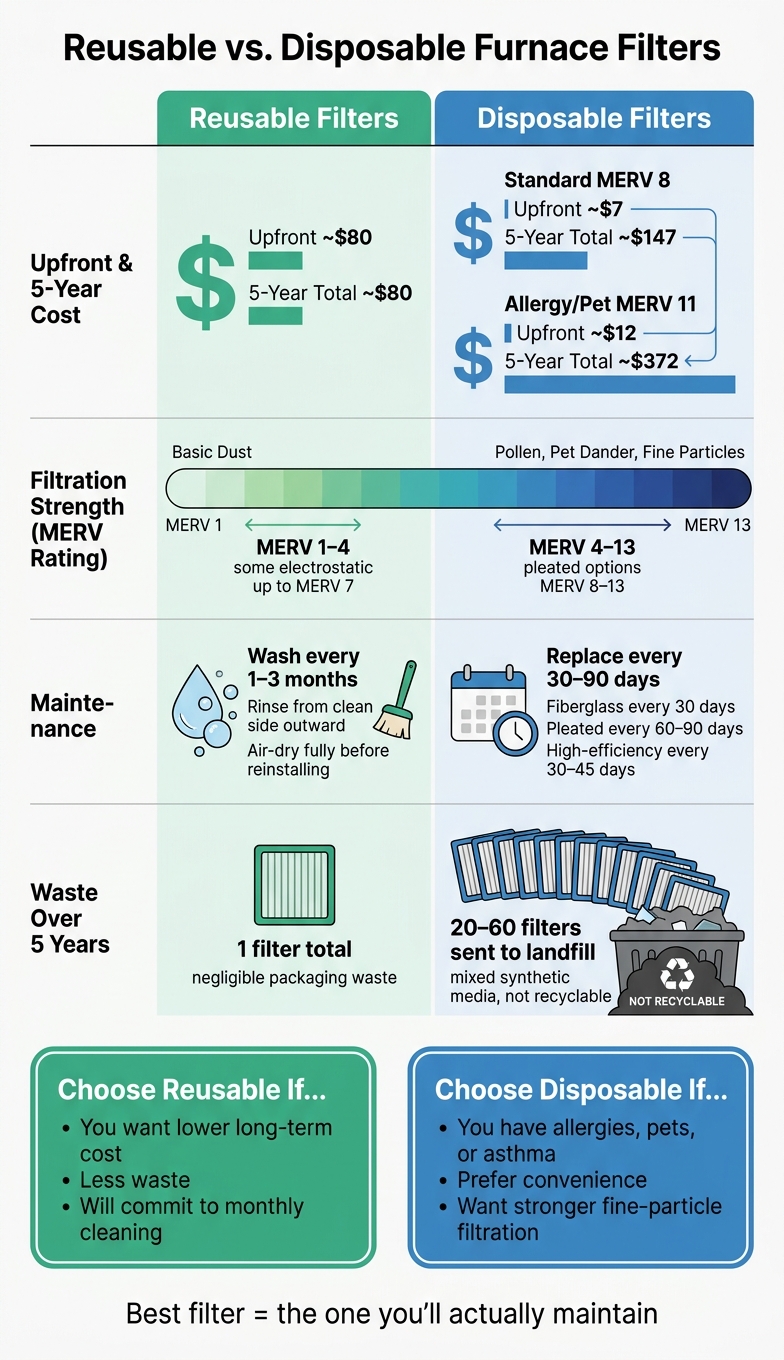
Reusable vs. Disposable Furnace Filters: Cost, Waste & Air Quality Compared
Building on cost and maintenance, the side-by-side view below makes the tradeoff pretty clear. Both filter types work, but they pull in different directions when you look at budget, upkeep, and what actually gets trapped before it moves through your home.
Five-Year Cost Comparison in U.S. Dollars
Upfront cost is where washable filters usually catch people’s attention first. A quality washable filter costs about $80 at the start and can last five to ten years if you clean it on schedule.
| Scenario | Upfront Cost (USD) | Total Five-Year Cost (USD) | Landfill Waste |
|---|---|---|---|
| Standard Home – Disposable MERV 8 | $7 | ~$147 | ~20 filters |
| Allergy/Pet Home – Disposable MERV 11 | $12 | ~$372 | ~30 filters |
| Standard Home – Reusable Filter | $80 | ~$80 | 1 filter, negligible packaging |
| Allergy/Pet Home – Reusable Filter | $80 | ~$80 | 1 filter, negligible packaging |
That said, cost is only one piece of the puzzle. Once you look at filtration power, the picture changes.
Air Quality Performance Across the Seasons
Disposable filters with higher MERV ratings catch finer particles. Washable filters, by contrast, tend to stop larger dust and debris.
Most washable residential filters land around MERV 4-7. Common disposable pleated filters usually fall between MERV 8 and MERV 13.
That gap matters more than it may seem. In many U.S. homes, the air carries pollen, pet dander, dust mites, and recirculated winter air through the system across the year. In those cases, MERV 11+ disposable filters have a clear edge for trapping finer particles.
One thing stays true no matter which type you buy: if the filter is overdue for service, performance drops.
Key Tradeoffs: Waste, Maintenance, and Convenience
Here’s the decision in plain English:
- Waste: One reusable filter used over five to ten years can keep a lot of single-use filters out of the trash. Disposable filters are made from mixed synthetic media, metal staples, and cardboard, and standard curbside recycling programs usually won’t take them.
- Maintenance: Washable filters need to be rinsed, dried all the way, and put back every 30–90 days, depending on your home and conditions. Miss that routine, and performance falls off. Disposables are much simpler: swap them out in a few minutes, and you’re back to full rated filtration right away.
- Filtration strength: If your household deals with allergies, asthma, or a lot of indoor particles, higher-MERV disposables do a better job with fine-particle capture. If your main concern is standard dust and debris, a well-kept washable filter can be a practical lower-waste choice.
Conclusion: Which Filter Is Right for Your Home?
After looking at cost, waste, and air quality, the decision comes down to one thing: maintenance.
There isn't one best pick for every home. Reusable filters can cut long-term cost and reduce waste, but only if you'll clean them on time. Disposable filters are easier to deal with day to day, which makes them a good fit for homes that want convenience.
Disposable filters are the simpler route. The tradeoff is recurring costs and more landfill waste.
Whichever type you choose, stick to the schedule. If you miss cleanings or replacements, airflow drops and filtration suffers.
The best filter is the one you'll keep up with.
FAQs
Which filter is best for allergies?
For people with allergies, a reusable electrostatic filter can be a smart pick. ElectroDust filters use a special electrostatic charge to trap common airborne irritants like pollen, dust mites, pet dander, and mold spores.
They come with a MERV 7 rating, a four-stage filtration process, and antimicrobial-treated materials to help support cleaner indoor air. During high-pollen seasons, it’s best to clean the filter once a month for the best performance.
Can a reusable filter damage my HVAC system?
Not if you take care of it.
Like any filter, a reusable one can clog over time. And when that happens, airflow drops. Your HVAC system then has to work harder, which can push up energy use and may even cause damage.
A simple cleaning routine helps avoid that.
- Wash it every 1 to 3 months
- Clean it every 2 to 4 weeks during heavy-use periods
- Use mild soap and lukewarm water
- Let it dry all the way before putting it back
- Check it often for wear
It’s pretty simple: a clean filter helps your system breathe easier.
How do I know when to clean or replace my filter?
Check your furnace filter at least once a month. If it looks dirty, it’s time to deal with it.
A clogged filter can also show up in other ways, including:
- Higher energy bills
- Uneven heating
- Reduced airflow
- Worse allergy symptoms
Most disposable filters need to be replaced every 1 to 3 months. Reusable filters should be cleaned every 1 to 3 months too.
If you have pets, smokers, or a lot of carpeting in the house, you may need to clean or replace the filter more often.